
.svg)

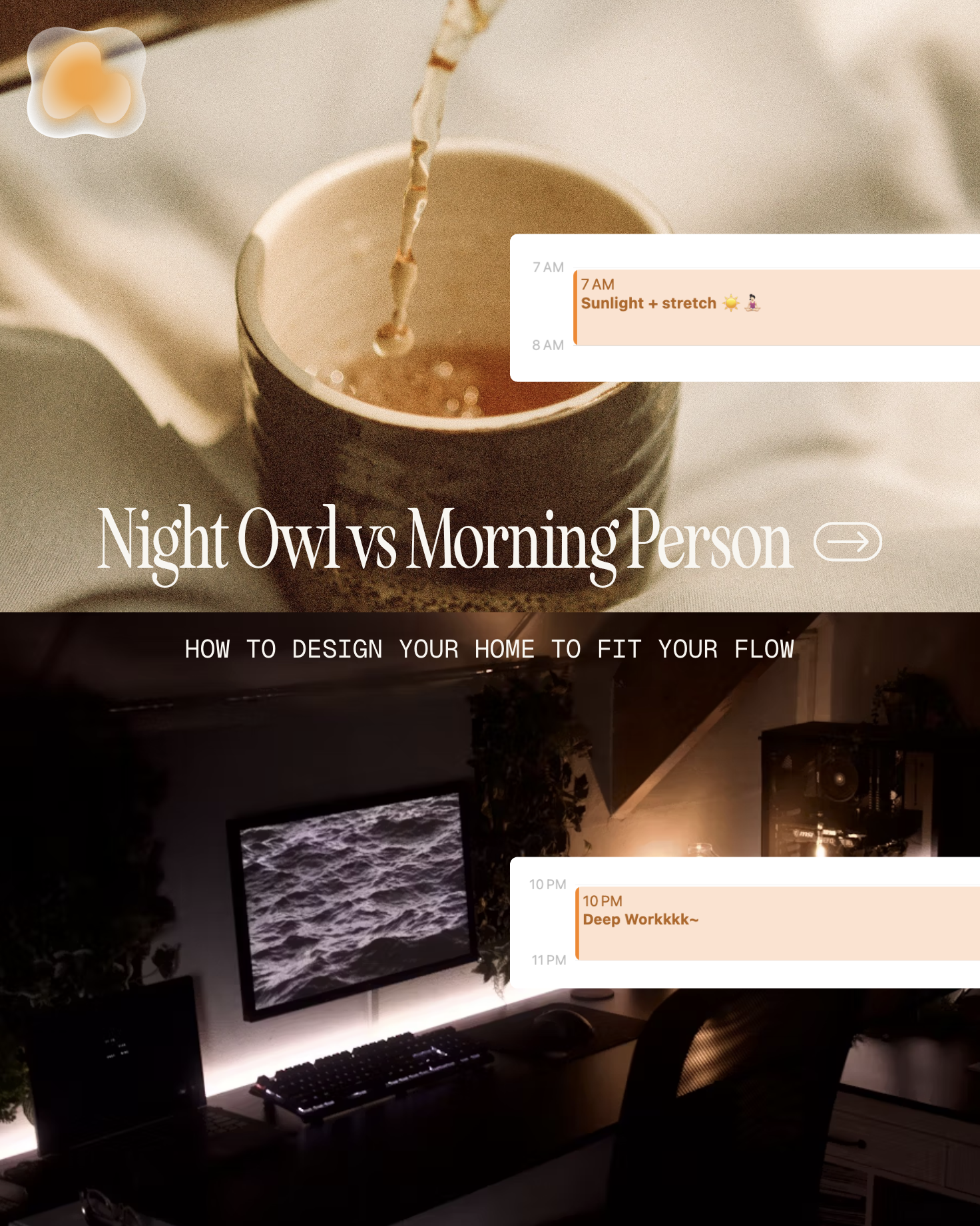

Not everyone wakes up ready to take on the day. And not everyone finds focus before the sun sets.
Whether you thrive in the quiet of night or the glow of early morning, your home should flow with your natural rhythm — not against it.
At Nuo Form, we believe good design starts with how you live, not just how your home looks. Here’s how to shape your space around the way your energy moves through the day.
For the Night Owl
When the world goes still, your ideas come alive. Midnight feels like your morning. If that’s you, your home should make late hours feel calm, focused, and easy to wind down from.
Create Lighting That Calms
Bright overhead lights can be jarring at night. Try warm lighting at different heights — a mix of floor lamps, table lamps, and wall sconces. Together, they form a soft pool of light that helps you stay focused while keeping your body relaxed.
If you tend to work late, consider dimmable bulbs or smart presets that shift from “deep work” to “rest mode” as it gets later.
Quiet the Noise
Sound travels differently at night, and quiet is part of what makes late hours peaceful.
Use curtains, rugs, and upholstered furniture to help absorb noise and soften echoes. If you share your space, thick drapes or even simple acoustic panels can keep things quieter for everyone.
Separate Work from Rest
Designate a small “charging dock” away from your bed. It could be a tray on a sideboard or a small shelf near your desk. Leaving your devices there signals to your brain that it’s time to switch off.
This boundary, however small, helps your mind move gently from doing to resting.
For the Morning Person
You like waking up with the sun, coffee in hand, and plans already forming. Mornings give you clarity. The way you design your space can help keep that momentum.
Let the Light In
If possible, position your desk or breakfast nook so it faces east. Morning light naturally boosts alertness and helps regulate your body clock. Even if your windows face another direction, mirrors can help bounce light into the areas you use first thing in the day.
Keep Mornings Soft, Not Stark
Use sheer curtains in your main morning zones so sunlight filters in gradually. The transition from sleep to wakefulness feels gentler when light enters the room in layers rather than all at once.
Use Materials That Energise
Light woods like oak or ash make a space feel airy and fresh. They reflect light and create a sense of brightness that helps mornings feel clean and open.
If you prefer darker finishes, balance them with natural textures like rattan, linen, or clay to keep the space from feeling heavy.
.jpg)
Design for How You Move
Pay attention to the paths you walk every day.
In the morning, it might be
bedroom → bathroom → kitchen → entryway.
At night, it might be
work desk → living room → bedroom.
These movement patterns can guide how you plan your layout.
If mornings feel rushed, keep those pathways open and clutter-free. Add hooks or shelves where you tend to drop your keys and bags.
If evenings are for slowing down, soften those same paths with gentler lighting or tactile textures that invite you to relax as you move through the space.
How Your Home Should Feel
Think beyond how things look.
Morning zones should feel open, bright, and ready.
Evening zones should feel enclosed, soft, and restful.
Small cues — like lighting temperature, fabric textures, and paint tones — can quietly tell your body what time it is. They help you transition naturally between energy and rest without having to think about it.
The Takeaway
Your rhythm is personal. Designing around it makes your home more supportive, comfortable, and true to how you live.
A home that flows with you — whether you’re an early riser or a night thinker — feels better to wake up in, and even better to come home to.
.jpg)