
.svg)

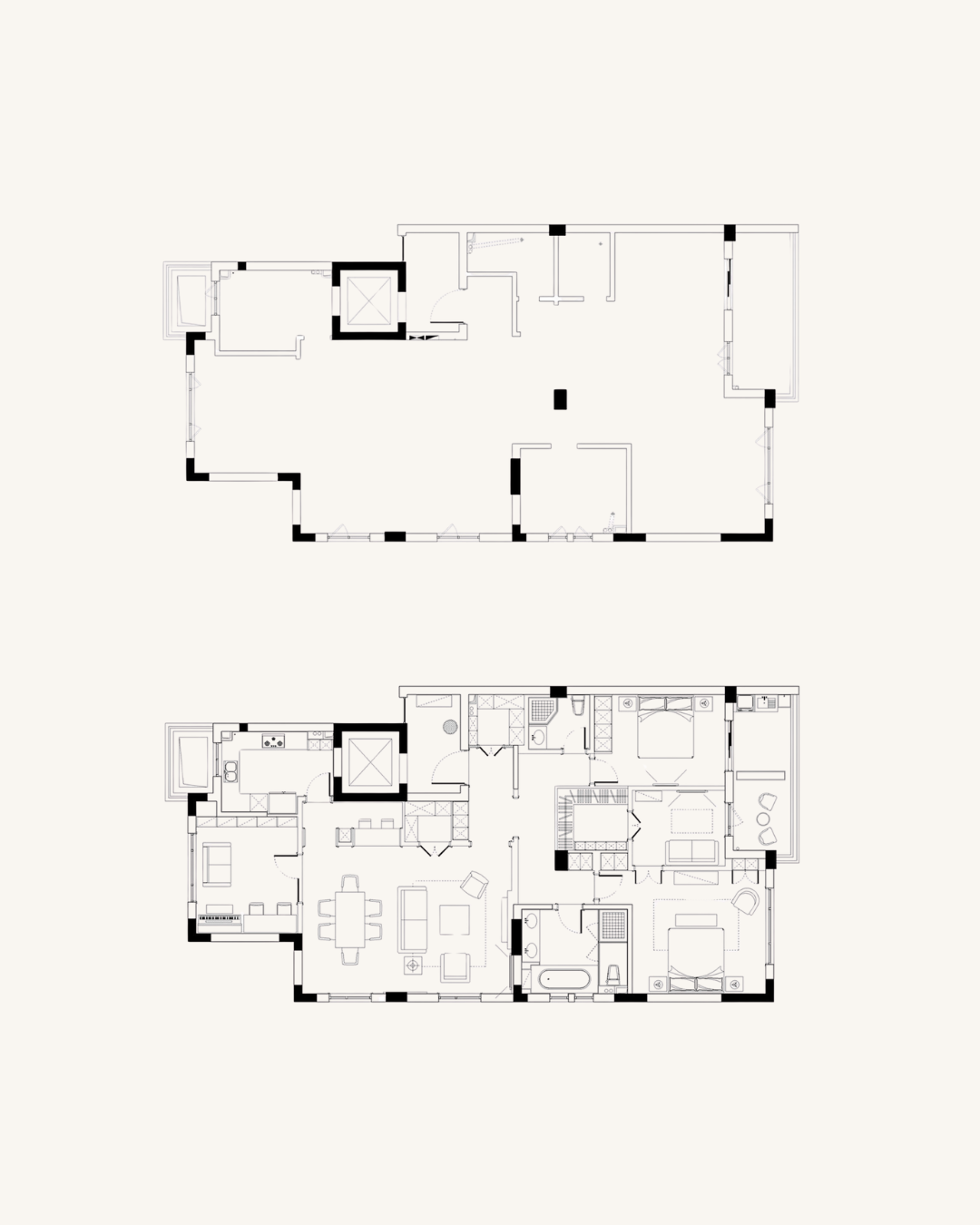

Floor plans can look intimidating—lines, symbols, measurements, and arrows everywhere. But once you learn how to “read” them, you start to see what designers see: a map of how life moves through a space. A floor plan isn’t just about walls and furniture; it’s about flow, light, and relationships between rooms. Here’s how to understand any floor plan in under three minutes.
Step 1: Start With the Flow, Not the Furniture
Before you zoom in on sofa placement or wardrobe size, take a step back.
Ask yourself: How does one move through this home?
Follow the arrows or door swings to trace the main circulation path. Where do you enter? How do you move from public spaces (living, dining) to private ones (bedrooms, study, bath)?
🟡 Designer’s tip: Good floor plans “breathe.” There’s a natural rhythm between open and enclosed spaces—too many doors or narrow passages often signal poor flow.
This quick read helps you sense whether the layout feels calm, efficient, or chaotic.
Step 2: Look for Light and Ventilation Points
Next, locate the windows and openings. They tell you everything about comfort.
Natural light and cross-ventilation make or break how a space feels, especially in compact homes. Check which rooms have direct windows and which rely on borrowed light.
✳️ Pro insight: North- or south-facing windows generally provide more consistent light throughout the day. West-facing units can feel warmer in the afternoons.
You’re not just reading the plan—you’re predicting how it will feel to live there.
Step 3: Decode the Proportions
Every square metre tells a story about priorities.
Use the scale to understand what’s spacious, tight, or well-balanced.
- A bedroom under 8 sqm often feels snug, better suited as a study or guest room.
- A living area of 18–22 sqm in a 4-room flat suggests a comfortable communal space.
- The width of walkways (ideally 900mm and above) affects how freely people move.
A floor plan isn’t just about fitting furniture—it’s about designing freedom of movement.
Step 4: Spot the Invisible Boundaries
Good designers see more than walls; they see zones.
Try to identify where the plan separates functional zones—like prep, dining, work, rest—without necessarily building physical barriers.
This is especially important for open-concept homes. The “invisible” boundaries you draw with rugs, lighting, or material transitions can define comfort as much as a wall does.
🪞 Designer’s lens: Ask yourself, Can I picture my daily rituals here?—where you drop your keys, where light falls in the morning, how sound travels.
If you can visualise that, the plan is doing its job.
Step 5: Read the Small Symbols (But Don’t Get Lost in Them)
Yes, those tiny icons—sinks, doors, arrows—matter.
But instead of memorising every symbol, focus on their relationships:
- How close is the sink to the cooktop?
- Is the bathroom too near the kitchen?
- Can a dining table open without blocking circulation?
Read these clues to assess functionality at a glance. You can too, once you focus on how spaces interact.
Step 6: Imagine the Lived Experience
The best floor plans aren’t static—they tell a story about movement, habits, and time.
Try this: Trace your day from morning to night—where do you wake, get ready, make coffee, work, unwind?
If that sequence feels smooth and supported by the layout, it’s a plan worth keeping.
You Don’t Need to Be an Architect to See Like One
Reading a floor plan in 3 minutes isn’t about technical mastery—it’s about empathy.
When you understand how space supports life, the lines start to make sense. Because a home isn’t built from walls—it’s built from how you move, pause, and feel inside it.
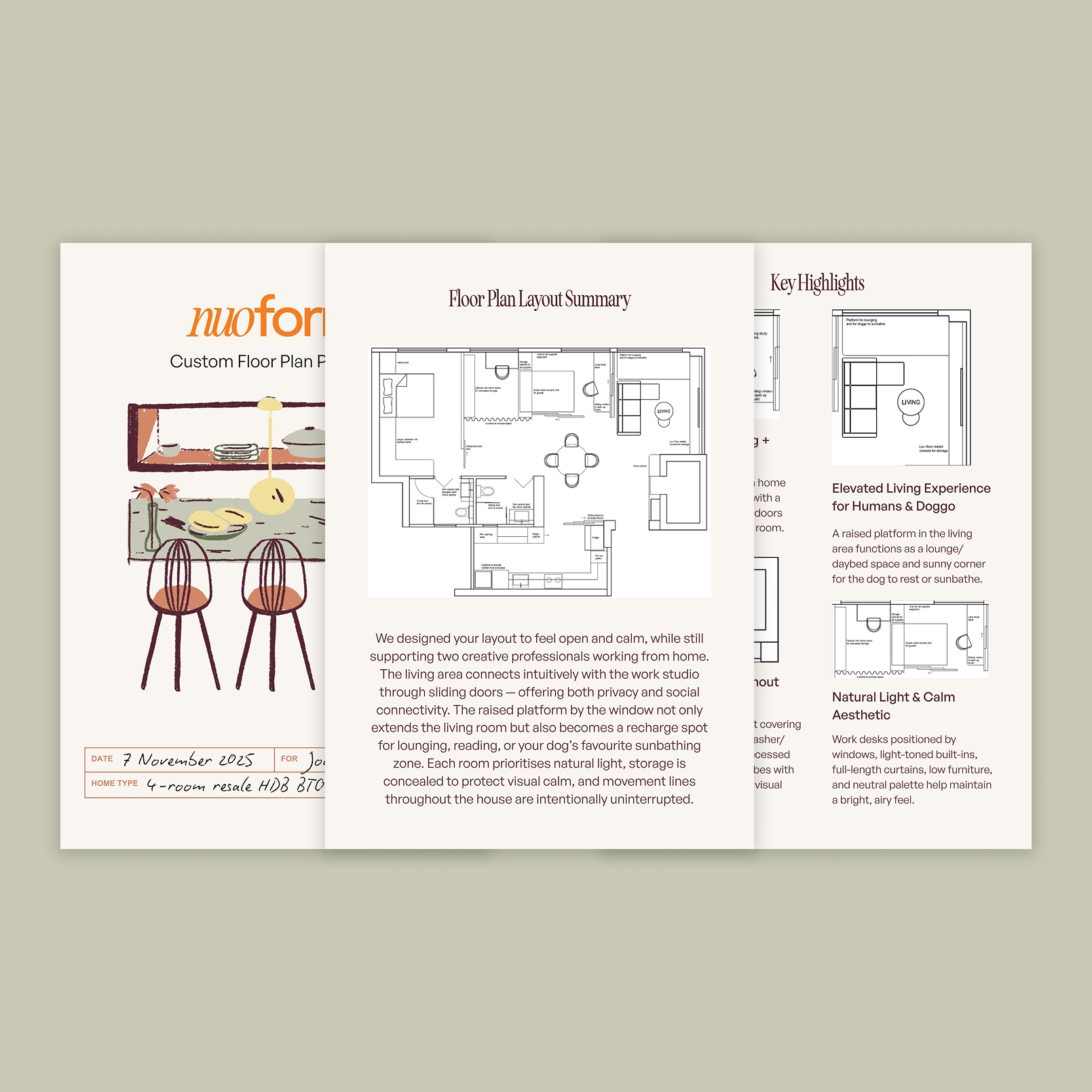
Get Your Free Custom Floor Plan
If you’re planning your renovation or just curious about how your home layout could work better, our designers can help.
Upload your existing floor plan and tell us about your lifestyle—we’ll send you a free custom layout with space planning ideas tailored to how you live.
.jpg)